
Where can you pay in instalments in Egypt?

Instalments in Egypt are no longer limited to electronics showrooms. A category-by-category map of where instalments are actually accepted, how to check before you go, and what to ask at the counter.
"Where can I pay in instalments?" has become a more important question than "can I?"
The market grew fast — EGP 96.27 billion of consumer finance in 2025, up 57% per the Financial Regulatory Authority — and it now reaches categories that weren't on the list five years ago.
This guide maps the shops by category and explains how to verify before you travel.
The categories that accept instalments
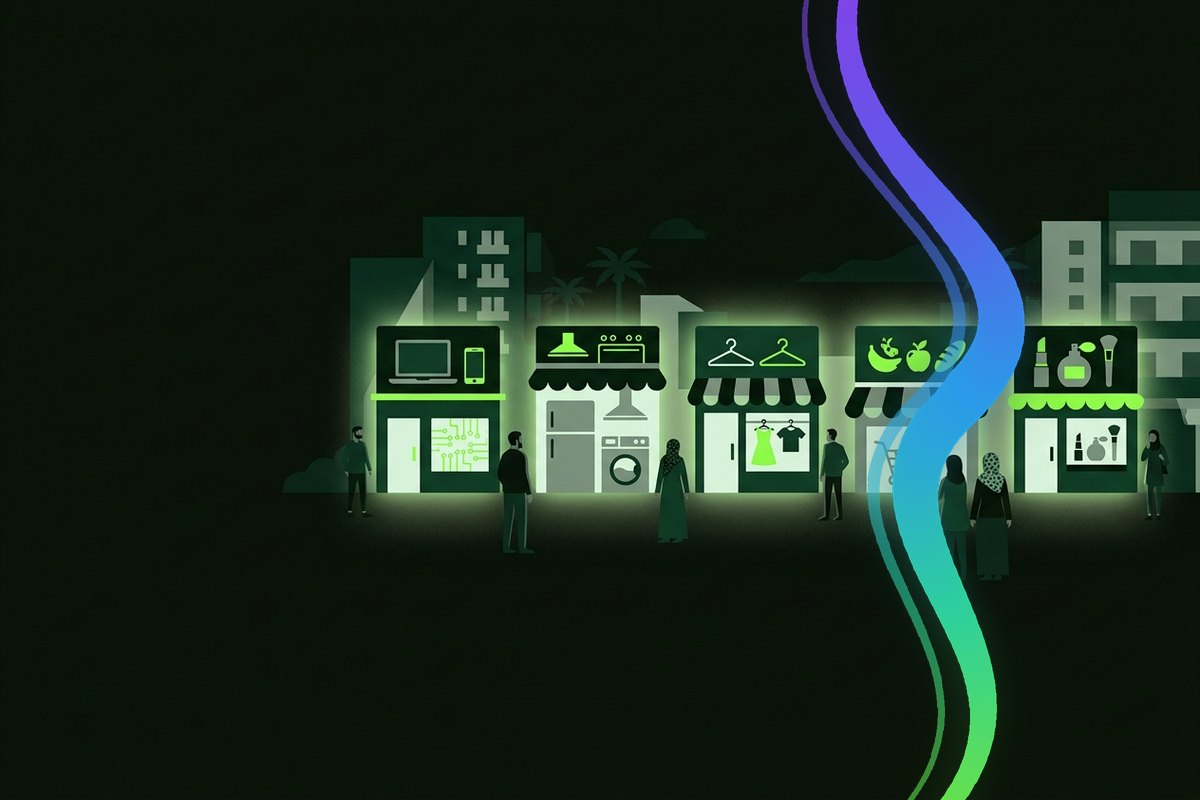
Electronics and home appliances
The largest category by a clear margin — 25.5% of consumer finance. Large chains and showrooms accept instalments in nearly every governorate, and bigger branches often offer more than one route in the same store.
More: electronics and appliance instalments · Raneen
Mobile phones
The fastest-growing line at 8.6%, up from 5.9%. Specialist phone chains are now among the easiest places to find instalments.
More: phone instalments · Mobilaty
Clothing and footwear
3.2% of the market. Major brands and malls now offer instalments, especially seasonally — sales, back-to-school and holidays.
Supermarkets and daily needs
This is the category that changed most. Financing a household shop now exists, and it's typically used at month end to cover the timing gap between expenses and salary.
Beauty, personal care and pharmacies
A category growing quietly, especially for higher-priced products and personal devices.
Furniture and furnishings
Large amounts with clear seasons — marriage and moving. Big furniture showrooms run in-house plans, and some accept instalment apps.
Services
The newest category: courses, clinics, travel, repairs. Coverage here is still far thinner than for products.
Three ways to pay in a shop
1. An instalment app — you spend your limit at a partner shop. The shop is paid in full; you repay the app.
2. A plan from the shop itself — the shop or a financing partner arranges it in the same visit.
3. A bank programme — using a credit card, converted into instalments before or after the purchase.
The practical difference: an app lets you compare before you walk in. A shop gives you one offer while you're standing there. When you decide determines whether you compare at all.
How to verify before you travel
1. Check the store list inside the app. It's the most accurate source and it's kept current.
2. Verify the branch, not the brand. A chain accepting instalments doesn't mean every branch does.
3. Call the branch. One question: "do you accept instalments from [provider], and at which branches?"
4. Ask about a minimum transaction. Some shops set a floor for instalment purchases.
5. Confirm the offer covers the product you want. Sometimes instalments apply only to certain categories.
Those five steps save a wasted trip — the most common frustration in instalment shopping.
What to ask at the counter
1. What is the total due if I finance this?
2. What is the price if I pay cash right now?
3. Is there a down payment?
4. Are administrative fees or insurance added?
5. What is the late fee in pounds?
The second question matters most. The whole comparison rests on it, and it's the one people forget to ask.
"Accepts instalments" isn't "has a good offer"
A shop accepting instalments doesn't mean its instalments are the cheapest around.
Some shops lift the base price once you ask about instalments, and some have cash prices above the market to begin with. Accepting instalments is an access advantage, not a price guarantee.
The rule: find the lowest cash price in the market first, then measure every instalment offer against it — not against the price of the shop you happen to be standing in.
Signs to stop
- Nobody will tell you the total.
- The price changes when you say "I'll finance it."
- The late fee has no clear figure.
- You're being pressed to decide today.
- The product has no invoice or agent's warranty.
Your rights
Licensed providers must disclose, before you contract, the financing amount, fees, annual rate, administrative costs and total due.
Since September 2025 they cannot charge you on the unused portion of your limit.
⚠️ And there is no binding legal cap on late fees — ask for the figure and write it down.
Reporting to I-Score is mandatory once your limit is approved.
Seasons: when the offers are genuine
Availability is one thing, timing is another. Some points in the year carry real offers; at others the base price is already inflated.
| Season | Active categories | Note |
|---|---|---|
| Ramadan and holidays | Supermarkets, clothing, appliances | Demand is very high and prices with it |
| Back to school (Aug–Sep) | Laptops, clothing, supplies | Genuine offers on study devices |
| Summer | Air conditioning, travel | AC costs most at the peak |
| Sale season | Clothing, footwear | Compare against the pre-discount price |
| Wedding season | Furniture, home appliances | Large amounts that deserve serious comparison |
A practical rule: in high seasons, compare against last month's price, not today's. The easiest method: photograph the product and its price a month before the season.
What happens in the shop, step by step
1. You choose the product and get its final cash price.
2. You say you'll pay in instalments and name the provider.
3. They confirm the limit available to you.
4. You choose the term, and the payment and total appear.
5. You verify both figures and approve.
6. You take the invoice in your name; the shop is paid by the provider.
Step 5 is the critical one. Once you approve, the number is binding. Read the total with your eyes, not your ears.
Common mistakes that cost money
1. Comparing against the shop's price rather than the market's. If the shop is 10% above market, its cheapest plan is still expensive.
2. Choosing the longest term for the smallest payment. A small payment is comfortable monthly and costlier overall. Know the difference and choose knowingly.
3. Buying in-store without checking the price online. Five minutes of searching can save thousands.
4. Adding more products because "there's limit left." A limit isn't your money — it's an amount you will repay.
5. Not asking about the late fee, because you don't intend to be late. Circumstances don't ask about your intentions.
How to choose between two shops that both accept instalments
If the same product sits in two shops and both accept instalments, the comparison comes down to four points:
1. The base cash price — the most important, and it varies between shops more than people expect.
2. The total after financing — payment × term at each.
3. Warranty and invoice — an agent's warranty and an invoice in your name, at both?
4. After-sales service — replacement, repairs, delivery.
If the first two are close, points 3 and 4 decide it — especially on large appliances.
A last note: decide before you walk in
The biggest advantage of instalment apps isn't speed — it's knowing your limit while you're still at home.
You walk into the shop already knowing the amount available, the term that suits you, the product you need, and its market price.
People who decide inside a shop under a salesperson's pressure pay more — not because the offer is bad, but because they can't compare in that moment.
Geographic coverage: the part nobody mentions
Most instalment articles in Egypt are written as though the service exists everywhere. The reality is different.
Large showrooms and chains have the widest reach and cover most governorates, because their branches already exist.
Consumer finance companies also cover a wide area, though their process takes longer.
Instalment apps usually start in Cairo, Giza and Alexandria and expand gradually. The reason is practical: expansion needs a merchant network in each governorate, and that's built shop by shop.
What does that mean in practice? If you're outside that range, the showroom itself or a finance company is usually the better route — not an app. And don't spend time applying to a provider that doesn't cover your area.
How to check? The "stores" or "coverage" page on the provider's site, or a direct question to customer service: "do you cover [governorate]?"
If instalments aren't available where you are
There are practical alternatives:
1. Buy online from a retailer that accepts instalments and ships to your governorate. Many chains do this.
2. The showroom's own plan — most large appliance showrooms run in-house plans independent of any app.
3. Gam'iyas. Outside the formal system, with no extra cost, but with no legal protection either — entirely dependent on trust. See our guide to instalments in Egypt.
4. Short-term saving. If the purchase isn't urgent, two months of saving removes the cost entirely.
Where Lucid fits
Lucid works with more than 500 shops across categories — electronics, phones, clothing, supermarkets, beauty — and the store list is published on the Lucid Business page.
The limit runs to around EGP 50,000, plans are two to five months, and the decision takes under 10 minutes with an ID and a selfie.
Plainly: coverage today is Cairo, Giza and Alexandria only, terms are short, and there is a late fee. If you're in another governorate or need a longer term, other options suit you better.
This guide is general information, not financial advice.
Frequently asked questions
Where can I pay in instalments in Egypt?
Electronics and appliance showrooms, phone chains, clothing stores, and some supermarkets, pharmacies and furniture showrooms. The most accurate list sits inside the instalment app itself.
How do I know whether a shop accepts instalments?
Check the store list in the app, then call the branch to confirm — not every branch of a chain necessarily participates.
Do all branches of a store accept instalments?
Not necessarily. Verify the specific branch before you travel.
Are instalments available in every governorate?
It varies by provider. Showroom chains reach further, while many apps start in Cairo, Giza and Alexandria.
Does financing raise the product's price?
There's usually a difference. Always compare payment × term against the lowest cash price in the market for the same product — not against the shop's own price.
Is there a minimum purchase for instalments?
Some shops set a floor. Ask before you reach the counter.
Can I finance a supermarket shop?
It's now possible at some chains, and is typically used at month end. Confirm with the branch first.
What's the difference between shop financing and an app?
The shop gives one offer while you stand there. An app lets you compare beforehand and works across many locations.
Can services be financed like products?
Less commonly. Courses, clinics and travel exist, but in a much narrower range than products.
Do shops ask for a down payment?
It varies. Some offers include one, some don't. A down payment lowers both the payment and the total.
What documents are required?
With apps, usually a valid national ID and a selfie. With banks, a card and more documentation.
Will the invoice be in my name?
It should be, and it's what proves ownership and activates the warranty. Ask for it.
Is instalment use reported to I-Score?
Yes. Reporting is mandatory once your limit is approved.
Is it possible without a credit card?
Yes with most apps. See instalments without a credit card.
What if the shop refuses instalments at the last moment?
Ask why — often the branch isn't activated or the product falls outside covered categories. The simplest fix is verifying before you travel.
Can I compare more than one offer in the same shop?
Yes, in shops that run more than one route. Ask for each offer's total in writing and compare.